Orthodontic Issues Treated at Our Woodside Office
Many patients come to us unsure of exactly what's going on with their teeth or bite, they just know something feels or looks off. Understanding common orthodontic issues is the first step toward getting the care you need. At our Woodside practice, Dr. Robert W. Bruno has helped patients of all ages address a wide range of orthodontic concerns with personalized, effective treatment.
Dental Crowding
Crowding happens when there isn't enough space in the jaw for all the teeth to fit properly. Teeth may overlap, rotate, or get pushed out of alignment. Beyond aesthetics, crowded teeth can be harder to clean, which increases the risk of cavities and gum disease. Orthodontic treatment can create space and guide teeth into their correct positions.
Open Bite
An open bite means the upper and lower front teeth don't make contact when the mouth is closed, leaving a visible gap. This can affect chewing, speech, and jaw function. Open bites are often linked to habits like thumb sucking or prolonged pacifier use, but they can also have skeletal causes.
Deep Overbite
A deep overbite occurs when the upper front teeth overlap the lower front teeth too much vertically. In severe cases, the lower teeth may bite into the roof of the mouth. This can cause wear on the teeth and discomfort in the jaw, and it's one of the more common orthodontic issues we see in both children and adults.
Missing Lateral Incisors
Some patients are born without their upper lateral incisors (the teeth just beside the two front teeth). This is one of the most common cases of congenitally missing teeth. Orthodontic treatment plays an important role here, either by creating space for a dental implant or bridge, or by closing the gap by shifting neighboring teeth into position. Dr. Bruno works closely with restorative dentists to coordinate the best long-term plan.
Underbite
An underbite is when the lower teeth sit in front of the upper teeth when biting down. This can result from a lower jaw that protrudes too far forward or an upper jaw that is underdeveloped. Underbites can affect chewing, speech, and facial appearance, and they're best addressed as early as possible when the jaw is still developing.
Spacing
While crowding involves too little room, spacing involves too much. Gaps between teeth can be caused by missing teeth, small teeth, or habits like thumb sucking. Spacing issues are among the more straightforward orthodontic issues to address, though the right approach depends on the underlying cause.
Overjet
Overjet refers to how far the upper front teeth protrude horizontally beyond the lower teeth. Often confused with overbite (which is vertical), overjet can make the front teeth more vulnerable to injury and may affect how you bite and chew. It's a very treatable condition with the right orthodontic treatment plan.
Frequently Asked Questions
How do I know which orthodontic issue I have?
The best way to find out is with a consultation. Dr. Bruno will evaluate your teeth, bite, and jaw to identify any concerns and recommend appropriate treatment.
Can adults be treated for these conditions?
Absolutely. Orthodontic treatment is effective at any age. Many of the conditions above are just as treatable in adults as in children.
How long does treatment take?
Treatment time varies depending on the complexity of the case. Some patients complete treatment in under a year; others may need 18 to 24 months. Dr. Bruno will give you a realistic timeline at your consultation.
Ready to Address Your Orthodontic Concerns?
Whether you're dealing with crowding, a bite issue, or gaps in your smile, effective solutions are available right here in Woodside at Bruno Braces. Call our office at 718-565-7242 to schedule your consultation, or use our online scheduling tool to find a time that works for you.
Crowding of the teeth
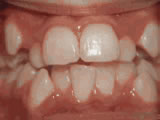 Before
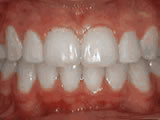 After
AfterPatient started treatment at age 11 and wore braces for 26 months. He loves his new smile.
Open bite - Front teeth don't touch
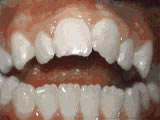 Before
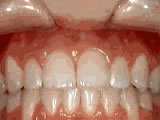 After
AfterPatient sucked her thumb as a young child. She started treatment at age 13. She had braces and a special appliance — called a crib — to retrain the tongue, for 28 months. Now she can bite the lettuce out of a sandwich.
Deep overbite - Lower front teeth bite into palate
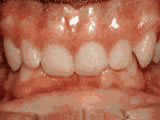 Before
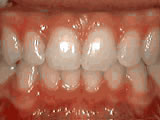 After
AfterThis adult patient, age 25, required braces and jaw surgery to correct his severe overbite, with treatment taking two years. His problem could have been corrected without surgery if he had been treated before he was a teenager.
Missing lateral incisors
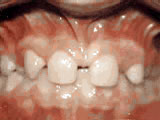 Before
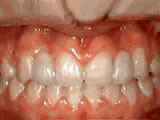 After
AfterThis patient's lateral incisors were congenitally missing. She had braces for 20 months to move the teeth into their correct positions, then the missing teeth were replaced with bonded "Maryland" bridges.
Underbite - Lower front teeth in front of upper teeth
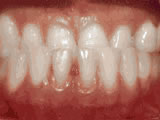 Before
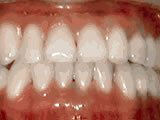 After
AfterPatient's underbite was causing her jaw joint discomfort and excessive wear patterns on her teeth. After about 30 months of treatment starting at age 32, she now finds smiling and chewing much easier.
Spacing of teeth
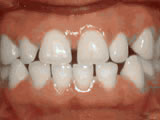 Before
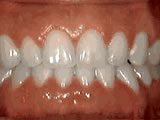 After
AfterPatient was bothered by the spaces between his teeth. Braces closed the spaces and gave him an ideal bite in 24 months. Special glued-in retainers help keep the spaces closed.
Overjet - Protruding front teeth
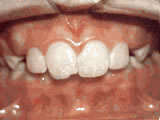 Before
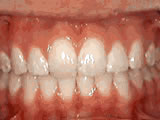 After
AfterAt age ten, patient had a big overjet with the top teeth protruding beyond the bottom. She had two phases of treatment. The first helped her jaws to grow more harmoniously and the second aligned her teeth and bite. At age 13, she was proudly displaying her new smile.
Non-braces treatment
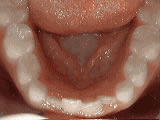 Before
 After
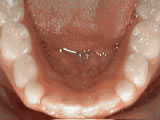
AfterSometimes braces are not needed to get noticeable improvements in tooth alignment. This patient was first seen at age seven for crowding of the lower permanent teeth. A procedure was performed to reduce the width of the adjacent baby teeth and the permanent incisors aligned on their own in nine months.
Phase-One
 Before
 After
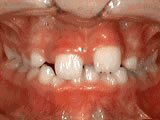
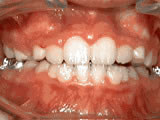
AfterPatient's parents were concerned about both aesthetics and the health of the erupting permanent teeth when they brought him to the orthodontist at age eight. The lower front teeth were crowded and touching the palate, and the upper front teeth were extremely displaced from their normal positions. After 12 months of Phase-One treatment with an expander and partial braces, patient's appearance and dental function were vastly improved.